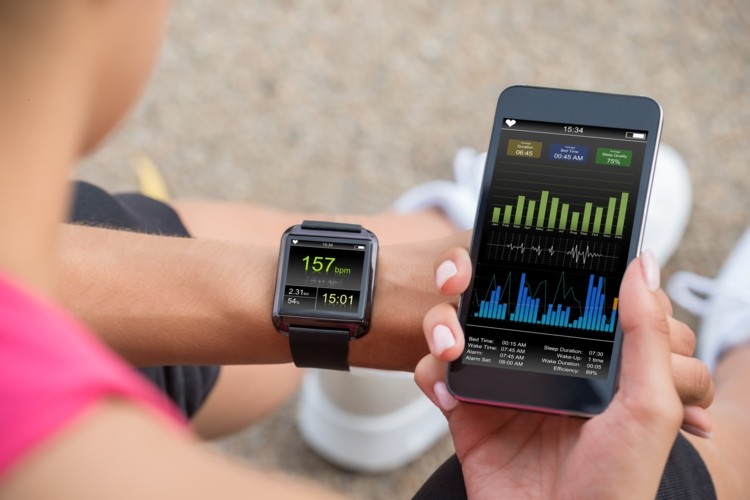
Wearable devices have not only made an impact in the commercial industry but also in health.
Erdmier, Hatcher and Lee (2016, p. 141) outline that the typical consumer can now monitor and manage their health through their smartphones. This is also something healthcare organisations have now taken on board and are utilising to reduce operating costs and simplify the monitoring of patients remotely.
THE BIG IDEA (EKG on your wrist: Will wearable devices change healthcare?) emphasises the significance wearable devices are having on the health sector.
Although these wearable devices present a number of opportunities for the health sector, they can also allow for potential limitations. According to Hassan et al. (2018), health wearable’s compared to their industrial counterparts cause more battery consumption. This is due to round the clock motion sensing many times per second. In essence, general users of wearable devices compared to people who need them for consistent health monitoring don’t exert as much battery consumption due to less frequency of use.
There is no denying the positive impact wearable devices will have on society in being able to provide sectors a new way of gathering and recording data. However, Langone, Setola and Lopez (2017, p. 304) argue that although wearable devices and implants provide many benefits for the patient, it does cause risks in their information being compromised by cyber attacks.
Langone, Setola and Lopez (2017, p. 304) further explain that to provide a security solution to a patient’s privacy would cause sufficient computing power as it is an “internet of things device” and would not be a quick fix. Therefore, wearable devices in the health sector could be viewed as an emerging technology. This could be argued due to the preliminary nature of its development.
 Wearable devices